
Sustainability
Why Wood Pallets Still Outperform Plastic for Most Operations
J&J Pallet Co. · 4 min read
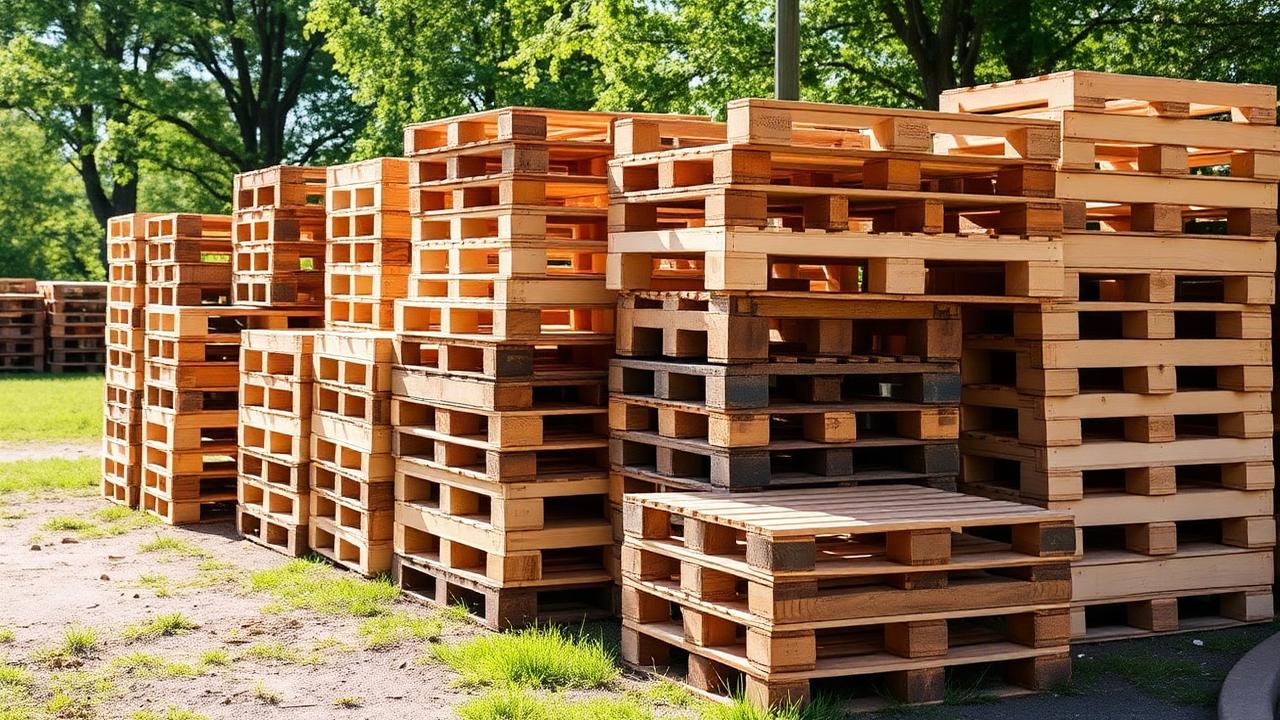
Wood remains one of the most durable and cost-effective pallet materials in the country—and it is better for the planet than you might think.
Plastic pallets get a lot of attention for being reusable and easy to clean, but for most shipping and warehousing operations, wood is still the smarter choice. It is durable, cost-effective, and—when sourced and recycled responsibly—one of the most sustainable options available.
At J&J Pallet Co., we build our pallets from excess virgin lumber, the material left over after producing building supplies and furniture. Instead of letting that wood go to landfill, we give it a second life as a strong, reliable shipping platform. Once a J&J pallet has finished its run, it can be repaired, reused, or recycled again into mulch or other wood products.
That cycle matters. The production of a typical plastic pallet consumes eight times more raw material than a reusable wooden pallet. Plastic pallets also require energy-intensive manufacturing and can be difficult to recycle at end of life. Wood, by contrast, is a renewable resource that stores carbon and breaks down naturally when it can no longer be used.
Wood pallets are also easier to repair in the field. A broken deck board can be replaced. A damaged stringer can be reinforced. Plastic pallets, once cracked, are often discarded entirely. For companies running tight budgets, that repairability translates directly into lower total cost of ownership.
Of course, plastic has its place in specialized applications like food-grade pooling or pharmaceutical shipping. But for general manufacturing, distribution, and retail, wood remains the workhorse of the supply chain. It has been that way for generations, and at J&J, we do not see that changing anytime soon.
If you are evaluating pallet materials for your operation, we are happy to walk through the numbers. Sometimes the oldest solution is still the best one.